The town of Howey-in-the-Hills was founded by William John Howey
and incorporated as “Howey” back in 1925. His vision was to build a
citrus empire and being the quintessential promoter (and to better
capitalize on the rolling hills of the area) he dubbed the area, “the
Florida Alps” and the name was changed in 1927
to “Howey-in-the-
Hills”. Now we are not exactly sure where those “Florida Alps”
are
nowadays, but at the time Howey had a vision and those “Florida
Alps” were quite
a sight.
Howey marketed the land to investors and over a period of four years,
housed prospective buyers in temporary housing on the shores of
Little Lake Harris.
The site was referred to as “Tent City” and it was
at this location that investors stayed while in town.
Howey is credited with building the first citrus juice plant in Florida,
right here in
Howey in the Hills. He sold juice under the name “Lifeguard” and today, Silver Springs Citrus is operating at the very
same location.
Now Howey in the Hills may have had it’s start in 1925 but the area
has history long before then. Construction of the first hard surface
roads did not even start in Lake County until the early 1900’s and
prior to that most transportation was on it’s waterways. In fact,
the Harris Chain of Lakes can be followed up through the St. Johns
River and eventually take boaters to the Atlantic Ocean.
Back in the day these waterways were the “I-4” of Florida and during
the Civil war they were regarded as “strategically important”. During
the war, the St. Johns River was the scene of intense fighting and
on more than one occasion Confederate troops hastily hid their
Gold bullion and cargo in hard to access creeks and lakes to avoid
capture by Union troops. 1864 saw intense fighting on the river and
more than twelve ships were sunk on the St. Johns alone. A recently
discovered ship, the Maple Leaf, went to it’s watery grave on the
river as a result of a Confederate mine. The steamer had contained
supplies for Union regiments.
Stricken vessels like the Maple Leaf were fair game for Confederate
troops to salvage if they could avoid capture. Union gunboats
guarded the mouth of the river against blockade-runners and
patrolled the lower portions of the river but were not able to venture
into the smaller creeks that led further inland. These routes were
often utilized by Confederate soldiers who would salvage stricken
vessels and take their cargo to areas that Union gunboats could
not follow.
One legend has it that near the end of the war, a Confederate
paymaster was being pursued by Union gunboats and made for
safety in the smaller creeks heading inland. Records reveal that he
wrote, “Being chased by enemy, course of action, head inland South
West. “After a day and one half journey, hid payroll at a point in
backside of a lake leading to smaller creeks. Nearby island rises from
water. Payroll, buried in the west hump of the rise.”
It is said they buried a million-dollar payroll and $300,000 in gold
coins. Could this location be the backside of Little Lake Harris? A
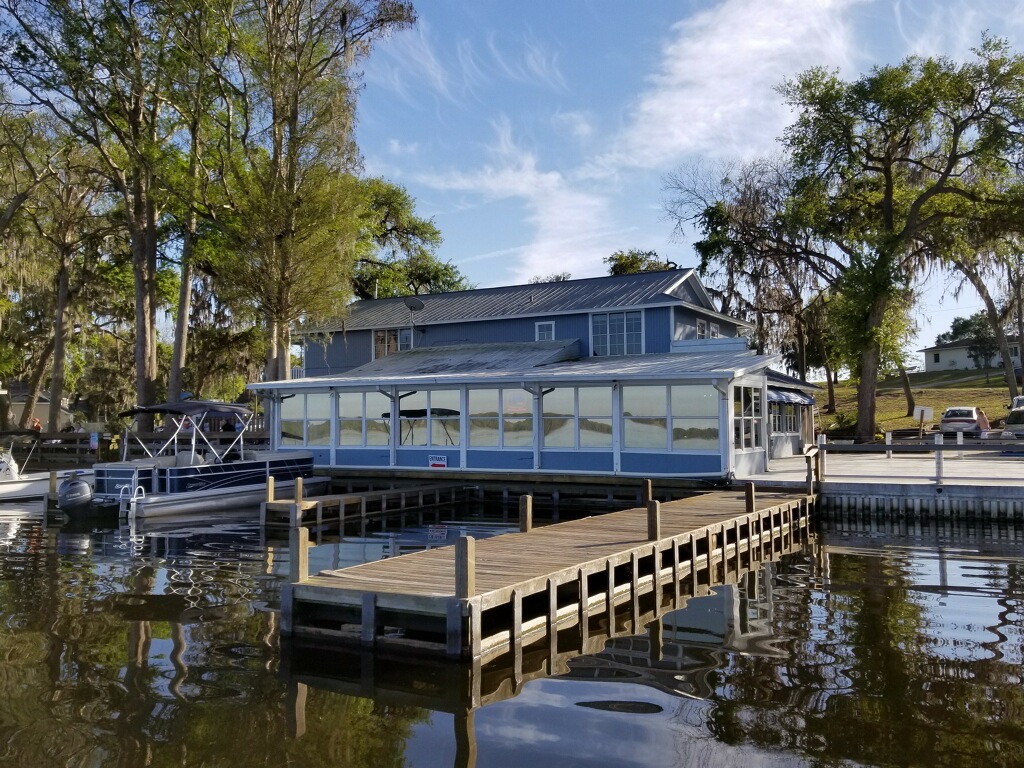
small island can be seen just outside JB’s front windows and a
swamp area is to our right. Was the chain of lakes a hideaway during
the war? We may never know.
After the war, the St. Johns became a popular tourist destination
for tourists who came via steamboats. This gave access to the chain
of lakes including Little Lake Harris where JB Boondocks is located.
By 1885, seven steamboat lines operated out of Palatka, rivaling
Jacksonville as one of the major port cities along the St. Johns River.
A Fishing Camp and marina were added years later and JB’s location
has been a “Watering Hole” in one shape or another ever since.
Whether you are searching for trophy Bass (the national BASS
MASTERS tour visit’s the chain every year), Civil War treasure or
just an ice cold beer and some great food to enjoy with friends we are
glad to have you with us!